

Permanent residence pathways that were closed or suspended in 2025, and the best alternatives
Canada’s immigration system experienced profound changes over the course of 2025, with various programs, pilots, and Provincial Nominee Program (PNP) streams seeing cancellations or indefinite pauses.
But despite these suspensions, there are still numerous suitable alternatives for foreign nationals seeking Canadian permanent residence (PR)—including soon-to-launch pathways.
Discover if You Are Eligible for Canadian Permanent Residence
This article will cover which PR pathways were discontinued in 2025, and the best alternatives for those affected by their closure (or indefinite suspension).
Provincial Nominee Program streams
Over the course of 2025, we saw several Provincial Nominee Programs (PNPs) close or put an indefinite pause on their provincial immigration streams:
Ontario Immigrant Nominee Program (OINP): Express Entry Skilled Trades Stream
The OINP announced the closure of the OINP’s Express Entry Skilled Trades Stream on November 14, 2025, noting “systemic misrepresentation and/or fraud” concerns—resulting in new applications not being accepted and submitted applications being returned.
Saskatchewan Immigrant Nominee Program (SINP): All Entrepreneur and Farm pathways
On March 27, 2025, the SINP stated it would no longer be accepting new applications, considering new expressions of interest (EOI), or issuing any further invitations for the following streams—and has no plans to reopen them in the future:
The Entrepreneur category;
The International Graduate Entrepreneur category; and
The Farm Owner/Operator category.
New Brunswick Nominee Program (NBNP): Express Entry Stream – NB Student Connection Pathway
In early February of this year, the NBNP discontinued this stream, stating it “is not returning for 2025.” It is unclear whether this stream will reopen in 2026.
It was designed as a PR pathway for international student graduates from in-province designated learning institutions.
The province also stopped accepting new EOIs for its Skilled Worker – Priority Occupations pathway in March of 2025, but didn’t provide any further details.
British Columbia Provincial Nominee Program (BC PNP): All student streams
The BC PNP closed its International Post-Graduate (IPG) Stream on January 7 of this year and later said three new student streams would be introduced: a Bachelor’s Stream, Master’s Stream, and Doctorate Stream—set to open in January 2025.
This never ended up happening, as on April 14th, the province said it was suspending these streams indefinitely until its “allocation levels are restored.”
Yukon Nominee Program: Yukon Community Program pilot
This pilot, which offered two-year open work permits to gain Yukon experience and qualify for PR, ended on June 30, 2025, as planned (after five years of operation).
Alternatives you can pursue:
Express Entry: If you qualify for one of Express Entry‘s programs and have a TEER 0, 1, 2, or 3 occupation, you can submit an Express Entry profile and be drawn through Canadian Experience Class (CEC) draws if you have qualifying work experience, PNP draws (if you have a nomination), or category-based occupational or language draws—if your National Occupational Classification (NOC) code is eligible.
Occupational-based category draws typically have lower Comprehensive Ranking System (CRS) cut-off scores than CEC draws, and generally only require six months of full-time work experience to qualify. Those affected by the closure of the OINP’s Express Entry Skilled Trades Stream, for example, can be considered for Trades draws—the most recent of which had a CRS cut-off of 505.
See your eligibility for all Express Entry streams here
Alternative PNP pathways: Those affected by the above-listed suspensions or closures may find it beneficial to check if they meet eligibility criteria for other PNP streams—both in the same province or others. For example, the NBPNP noted that New Brunswick graduates with eligible employment can still apply through the NB Employment pathway under the NB Express Entry Stream.
It’s worth noting that many PNPs prioritize those with connections to the province, but some have streams don’t.
Assess your eligibility for all Express Entry-linked PNP streams here
Atlantic Immigration Program (AIP): If you’re interested in settling in Atlantic Canada, you can pursue PR through the Atlantic Immigration Program. You must have a job offer from a designated employer in one of the participating provinces, and the job offer must be endorsed by the province (among meeting other criteria).
Be aware that Immigration, Refugees and Citizenship Canada (IRCC) currently has a 37-month processing time for AIP applications.
Immigration pilots: Those with a job offer from a designated employer in a participating community can obtain PR through the Rural Community Immigration Pilot (14 participating communities) or the Francophone Community Immigration Pilot (six participating communities).
The FCIP requires you to meet an NCLC level 5 across all language abilities.
Quebec programs
The Quebec Experience Program
On November 19, 2025, the Government of Quebec ended its Quebec Experience Program (PEQ), which offered PR through two streams: The Quebec Graduates Stream and The Temporary Foreign Workers Stream.
This program has been paused since October 31, 2024.
Immigration pilots
On November 6, 2025, the Government of Quebec announced that it would officially be discontinuing its three pilot programs on January 1, 2026, as planned:
Pilot program for workers in food processing;
Pilot program for orderlies; and
Pilot program for workers in the artificial intelligence, information technologies and visual effects sectors.
As of November 6, it had reached its cap for all three pilots, except the Francophone profile under the latter pilot, for which it would accept applications for until December 31, 2025.
Alternatives you can pursue:
The Skilled Worker Selection Program (PSTQ) is now the only pathway to PR for skilled workers in Quebec—which was previously on hold until July 27, 2025, after replacing the Regular Skilled Worker Program in 2024.
Skilled workers wishing to immigrate to Quebec through this program must submit a declaration of interest via Arrima.
Learn more about your options and get assistance immigrating to Quebec
Agri-Food Pilot
The Agri-Food Pilot, which provided a pathway to PR for individuals working in select agri-food occupations (eight total), closed on February 13, 2025—about three months earlier than originally planned due to high demand.
The pilot launched in 2020, but was extended in 2023, with a planned end date of May 14, 2025.
The agricultural and food-processing sectors that qualified included meat product manufacturing, greenhouse, nursery and floriculture production (including mushroom production), and animal production.
Alternatives you can pursue:
Express Entry (and category-based selection): Two out of eight NOCs eligible for the Agri-Food pilot—Butchers – retail and wholesale (NOC 63201) and Agricultural service contractors and farm supervisors (NOC 82030)—are skilled, and thereby eligible under Express Entry*.
Further, those falling under NOC 63201 may qualify for Express Entry category-based selection under the “Agriculture and agri-food” category.
*To be eligible for Express Entry, you must first meet the requirements for one of Express Entry’s three programs: CEC, Federal Skilled Worker Program, or Federal Skilled Trades Program.
PNPs: If you meet eligibility criteria, you may be eligible to obtain PR through a PNP, especially if you have connections to that province.
You may be eligible under a more general stream, or streams targeting the same NOCs as those eligible for the Agri-Food Pilot—such as Saskatchewan’s Agriculture Talent Pathway, which targets five of the eight Agri-Food Pilot-eligible NOCs.
AIP: If a province prioritizes agri-food occupations, you will have an advantage—for example, Newfoundland and labrador deemed “agriculture” a priority sector in 2025.
Rural Community Immigration Pilot (RCIP): The RCIP provides a route to PR for those with a job offer from a local employer (in one of the 14 participating regions), which must be endorsed by the regional economic development organization. Each community publishes its priority sectors, and typically also eligible occupations.
In 2025, several communities prioritized agricultural and food processing occupations, such as Claresolm, Alberta—which targeted three of the same occupations as the Agri-Food Pilot. It is likely that some of these communities will continue to seek out workers agricultural and food processing workers to fill labour gaps in 2026.
Assess your eligibility for the RCIP
Home Care Worker Immigration Pilots
On December 19, 2025, the federal government announced that it would no longer be accepting applications, and would be implementing a long-term pause for its two home care worker immigration pilots:
Home Care Worker Immigration Pilot: Child Care (HCWP: CC); and
Home Care Worker Immigration Pilot: Home Support (HCWP: HS).
Both pilots hit their cap mere hours after opening on the first day and were expected to reopen in Spring of 2026. As of now, IRCC will not begin accepting applications again until March 30, 2030.
These pilot programs provide a route to PR for workers who have job offers in home care or child care.
The eligible National Occupational Classification (NOC) codes for each include:
PilotEligible NOCs
HCWP: CC-Home child care providers (NOC 44100)
-Early childhood educators and assistants (NOC 42202)
HCWP: HS-Home support workers, caregivers and related occupations (NOC 44101)
-Nurse aides, orderlies and patient service associates (NOC 33102)
Alternatives you can pursue:
Express Entry (and category-based selection): Two of the above NOCs fall under skilled work experience (NOCs 42202 and 33102) and thereby qualify for Express Entry consideration.
They are also eligible for category-based draws—NOC 44202 is eligible under the “Education” category, and NOC 33102 is eligible under the “Healthcare and social services” category.
Get a Free Express Entry Assessment
PNPs: Individuals in any of the four occupations above may also have luck through the PNP, as many provinces have consistently prioritized those in education, caregiving, and healthcare roles in 2025—and may continue to do so in 2026.
Manitoba, for instance, frequently invited individuals under NOC 44101 for provincial nomination, and Ontario held many draws targeting those in NOCs 33102 and 42202.
AIP: If a foreign national has a job offer from a designated employer in an Atlantic province, and meets all other eligibility criteria, they can apply to IRCC for PR.
In 2025, all the Atlantic provinces prioritized healthcare occupations, with New Brunswick also prioritizing Education occupations (though it stopped accepting new applications in April 2025). Looking forward, we know that at least one Atlantic province—Nova Scotia—will continue to prioritize healthcare and social assistance roles.
RCIP: Many of the communities participating in the RCIP targeted the same NOCs as the Home Care Worker Pilot in 2025, such as Timmins (Ontario) or West Kootenay (BC). You can check each community’s website for their 2026 priority sectors and occupations.
Start-up Visa Program
On December 31, 2025, IRCC stopped accepting new applications under the Start-up Visa Program—with an exception made for those who already secured a valid commitment from a designated organization made in 2025 (but haven’t applied yet).
The program, which officially closed as of January 1, 2026, allowed foreign entrepreneurs to gain PR by establishing a new business in Canada, outside Quebec.
The program’s termination is likely linked to application volumes exceeding governmental processing capabilities, with extended processing times (10+ years) drawing criticism over the course of 2025.
At the same time as this program’s closure was announced, IRCC also stated it would be extending the pause on the Self-Employed Persons Program (10+ year wait time) “until further notice.”
Alternatives you can pursue:
The government noted that details on a new targeted pilot program for immigrant entrepreneurs will be announced in 2026, which will “help address the large application inventory for Canada’s business programs.”
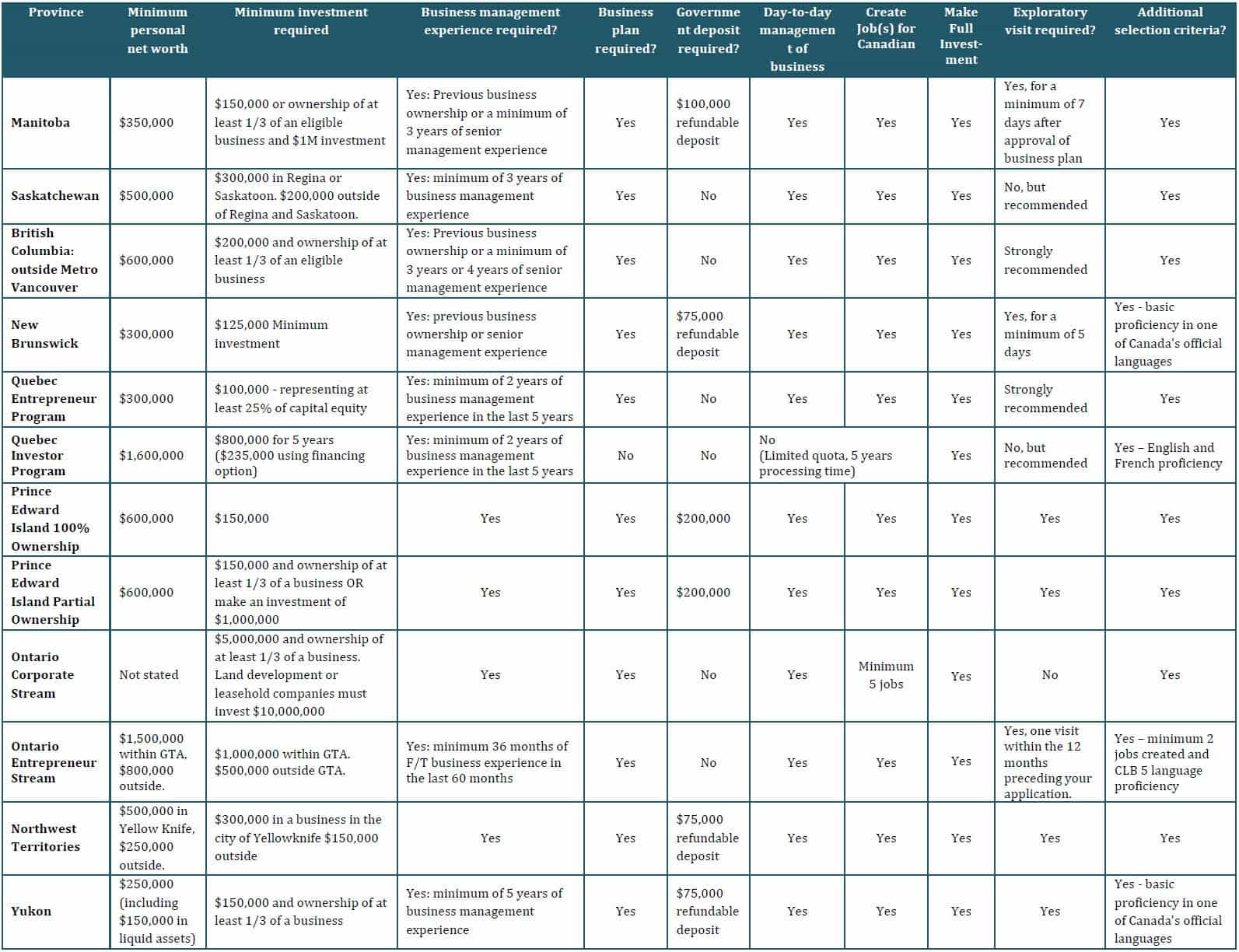
Until then, the best bet for foreign entrepreneurs is likely to be obtaining a provincial nomination through an entrepreneur-focused PNP stream. Here are some examples of PNP streams targeting entrepreneurs:
British Columbia, two streams: Base Stream or Regional Stream.
Alberta, four streams: Rural Entrepreneur Stream, Farm Stream, Graduate Entrepreneur Stream, and Foreign Graduate Entrepreneur Stream.
Manitoba, one stream (two pathways): Business Investor Stream—Entrepreneur Pathway and Farm Investor Pathway.
Nova Scotia, two streams: Entrepreneur Stream and International Graduate Entrepreneur Stream.
Newfoundland and Labrador, two streams: International Entrepreneur Stream and International Graduate Entrepreneur Stream.
Economic Mobility Pathways Pilot
The Economic Mobility Pathways Pilot (EMPP) stopped accepting applications through its two streams (job offer stream and non-job offer stream) in July of 2025—and officially concluded on December 31, 2025, as planned.
The EMPP is a PR pathway that links skilled refugees and other displaced people with Canadian employers.
Alternatives you can pursue:
This past June, the federal government announced plans to introduce a new permanent immigration program, informed by the EMPP’s strong results, before the pilot concluded.
It failed to launch this new program before the expiry of the EMPP, but IRCC officials confirm the department is currently working on it. Once this new program launches, designed to benefit both refugees and Canadian employers, it will likely be the best EMPP alternative.
In its 2026-2028 Immigration Levels Plan, the federal government announced a one-time initiative to transition around 115,000 Protected Persons (like those previously eligible for the EMPP) from temporary residence status to PR status—more details on this one-time policy are expected in 2026.
If eligible, foreign nationals can also submit a refugee protection claim or apply to IRCC for Humanitarian and Compassionate consideration (in “exceptional” circumstances).
Discover if You Are Eligible for Canadian Permanent Residence